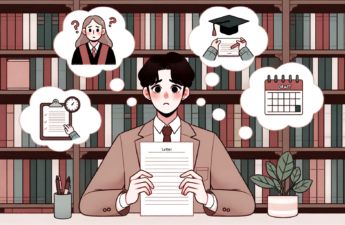
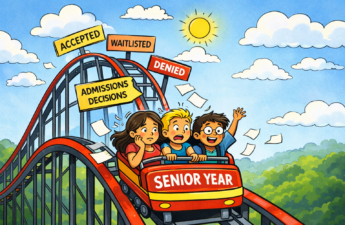
Many high school students believe the persistent myth that taking more Advanced Placement (AP) classes means a stronger college application. However, while AP courses represent “academic rigor”, simply collecting AP’s without reflection, students may not demonstrate what admissions officers actually value: curiosity and depth. The Problem with “Collecting” Credits Many students add AP’s as markers…
Category: Education
Preparing for Employment in the Age of AI
Many experts predict that AI will soon (if not already is) automate many entry-level white-collar jobs, traditionally the realm of new college grads. Thus, for current high school students, I recommend shifting strategy for career development from mastering tasks (or competencies) to mastering judgment. Emerging college grads future value lies in an ability to critique,…
How to Draft Strong Summer Program Essays
One of the most common mistakes students make when writing summer program autobiographical essays is trying to brainstorm, write, and edit at the same time. Students often focus on the word limit too early in the drafting process, and in doing so, they shrink their thinking before a real story has a chance to form.…
The Optional Admissions Interview: A Conversation, Not an Interrogation
For many students, the phrase optional admissions interview triggers a familiar fear: What if I say the wrong thing? What if I don’t have the perfect answer? It’s easy to imagine the interview as exposing and unforgiving. Yet, the optional admissions interviews are as much for the applicant as for the college. Think of the…
Writing Under Pressure
For seniors applying to highly selective colleges, including Ivy League school, the writing process often carries an extra, invisible weight. While students worry about What should I say? but also How do I compare to everyone else in the applicant pool? When single digit acceptance rates loom large, what a student writes can seem like…
Why One “B” in High School Isn’t the End of the College Admissions
For some students, especially those who have only ever earned A’s, the first “B” can seem like a crisis. Families often wonder if this single grade will damage college admissions chances. The truth: it won’t. Admissions officers use a holistic evaluation process. That means they look at much more than a GPA snapshot: In fact,…
Tips for writing the UC Personal Insight Questions
Every year, students approach the University of California (UC) Personal Insight Questions (PIQs) as if their “my fate is riding on what they write”—one “wrong” topic, one imperfect sentence, and everything falls apart. While the anxiety is understandable, such concern is also ground in a misunderstanding of what the PIQs are meant to do in…
Breaking Writer’s Block: “I don’t have a sob story”
At some time, the rumor started, then spread year after year, that college admissions officers admit students who have experienced heartbreak, difficulty, the “I overcame this challenge” narrative. So, students often compare their experiences to loss or catastrophe or illness, paralyzed to start writing when nothing seems “tragic enough.” But, in reality, admissions officers seek…
Making the Most of the PSAT
Many students treat the PSAT as “just practice,” a low-stakes chance to build confidence, sharpen test taking strategy, and prepare for future SAT or ACT testing. Start with the College Board + Khan Academy A simple three-step approach works best: More Than Content Taking the PSAT, students can build testing stamina and strategic thinking under…
Thank You, Class of ’28 Sacramento Rebels — Q&A Follow-Up
Thanks to the Sacramento Rebels Class of 2028 families and players for welcoming me and asking thoughtful questions about college planning. I wanted to share a few additional insights to expand on some of the conversation: Q: For FAFSA, which tax years matter, and what else do families need to know? For the Class of…
Why a Multi-Step Brainstorm Matters
Many students approach writing as if it were a one-pot recipe: brainstorming, drafting, and editing—all tossed together in a single step. While seemingly efficient, often students rush their ideas, under the pressure of production by the deadline. Thus, their reflections can be shallow, and repeating frustration over sentences “not sounding right.” Yet with a thorough,…
Transforming “The Homework” Conversation
Most parents simply seek to connect with their children about their daily lives, or understand if their teen needs support, or some combination of both. However, some teens, seeking to assert independence, may rebuff their parents’ conversation starters, resent parents’ checking online grading portals, or some combination of both. As both teen and parent are…
Helping Teens Turn Setbacks Into Self-Discovery
During the freshman and sophomore years, students often shift, sometimes, quitting multi-year extracurricular activities. For parents, such moments can seem like red flags, worried about the views of admissions officers of their teenager who’s simply maturing. But with a shift in perspective, such life changes can become opportunities for choice and self-discovery. When a teens…
College Lists Are Living Documents—Let Them Evolve
A student’s college list isn’t carved in stone. It’s more like a proposal or hypothesis, which will be confirmed as seniors draft their autobiographical college essays. Early in the process, many students pick colleges based on name recognition, geography, or what their friends are choosing. But as each student reflects more about their goals, values,…
Get Bored. It’s Good for College Admissions.
If you’re a parent watching your teenager scroll, nap, or wander aimlessly this summer, it’s easy to worry. Is all this “downtime” a missed opportunity? Will it put them behind in college admissions? Here’s a counterintuitive truth: boredom, when approached mindfully, can actually be a productive part of your teen’s maturing—and even strengthen their college…